


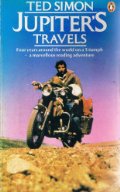
Jupiter's Travels is a book by Ted Simon which narrates his four-year journey through 126,000 km across 45 countries
on a Triumph Tiger 100 500 cc motorcycle from 1973 to 1977, a must read for anyone biker or not.



In this affecting travel memoir, Simon pursues both a component of his own history and a vision of post-Soviet Europe circa 1994. Reared in wartime England, Simon decided to check out eastern Europe, the one area of the world he had not travelled. He knew virtually nothing about his estranged father's background other than that he was a Romanian Jew who emigrated to London as a young man. . . . The result, this book, is lush with personality and anecdote on subjects ranging from the author's shrewd reading of the nature of life behind the now vanished Iron Curtain, to Eastern European youth's "tangible sense of self-worth" in the face of drastic economic decline and hardship.
The ship drew nearer to the old man, and I saw him plainly. Only his head and naked shoulders were above water. He was a well-built, quite striking figure, with skin the colour of a hazelnut, a completely bald head and a pair of bushy white whiskers.
The most extraordinary thing about him, though, was his absolute immobility. The ship came within thirty yards of him, I could have ringed him with a quoit, but he never raised his head nor let a flicker of emotion change his expression, which was one of total resignation, as he floated by, more like a waxwork effigy than a man.
I watched this with great surprise, feeling sure that in his position I would have had to laugh or shout or, at least, acknowledge the hundreds of spectators gazing down at me. Then we were past and leaving him behind.
"Why aren't they going for him?'" I asked indignantly. "Why don't they get a line out?" Every new episode in this affair astonished me.
A passenger leaning over the ship's rail shouted excitedly in his own language, pointing down. Whether he had heard my question or not, he provided the answer.
Below us, beautifully visible in every detail and circling lazily beside the ship's hull was a shark. It was eight feet long or more, dark brown in colour shading to white at the tips of its fins, an elegant and menacing fish.
People all around were calling out now. "Look, look, shark! Oh dear! White finned shark. Most dangerous . . ." and so on. A juddering vibration ran through the ship as the propellers went into reverse. The loudspeakers began to bark.
". . . Number three lifeboat," I heard. The derricks rattled and a boat, with several men inside, swung out over the side on the two cables and slowly descended. What then followed was a scene of danger and violence I would never forget.
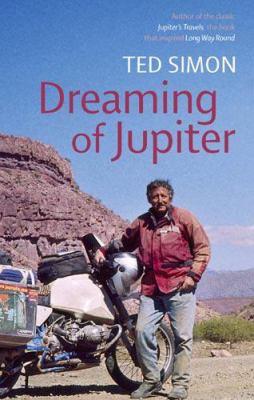
I nearly put this book down in the first 80 pages-Ted Simons finds anti-climax at every corner-people he met in the 70s have gone-the world seems full of litter and is now built up where once was paradise. However I began to realise that his honesty is part of the author's strength . He equally describes the beauty of Africa-the thrill of the high Andes , the stunning Australian outback and the kindness of strangers.We are left with an impression that it is still a wonderful world out there but it needs protecting.When I look back at Jupiter's travels he also describes misery filth and poverty amongst beauty .Why did that not affect me in the same way when I first read it? It probably did .We look back at Jupiter's travels through rose tinted glasses and I'm sure we will do the same with this book.It is a classic which took me from my hammock in the garden to the wild high places of the world and gently back again-Well worth reading.
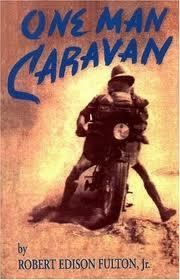
In 1932, a young man of maybe limited resources, but unlimited resourcefulness and "chutzpah", saddles up his motorcycle and travels around the world in 18 months. En route, he encounters exotic locals and locales, battles bad roads, breakdowns, injuries, officials and wanders into hot zones of civil wars - such as the British fighting some rebels in fictitiously-sounding Baluchistan. As a young Harvard graduate in 1932, to impress a young lady, Robert Fulton became the first man to ride a motorcycle (a Douglas) around the world. He rode through civil wars & exotic lands, overcoming injuries, breakdowns, bad roads, bad officials--you name it. He is a great writer who considers motorcyclists the closest thing to cowboys in a mechanized era. He's filled with humor, respect for humanity, and a sense of grand adventure.
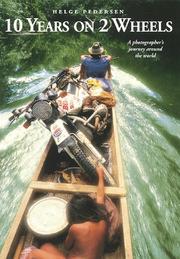
Helge Pedersen is one of the most travelled and internationally-known professional touring motorcyclists in the world, and well-known to the world's motorcycle press. His book is beautifully done- world class photos. And Helge's story is extremely entertaining. He is both humorous and humble as he relates anecdotes of his travels-definitely not a 'tour guide' view of the world. Helge's portraits of people show such sensitivity and elegance. It's very obvious how much he respects his subjects. His photos of the landscapes are dramatic, different. It's an easy read. I love this book.
This book kicks off in Australia, having sailed across from Africa on a container ship, and then takes you through the exotic lands of SE Asia, across Asia proper, through the Middle East and on through Eastern Europe. You’ll find me close to death a couple of times – I was hit by a van in Australia, and rescued by 3 Hells Angels (honestly), fell asleep on the long hot straight roads of the outback – on the bike! And nearly died in Thailand but was rescued that time by a prostitute – really! I get involved with smugglers in India, get a buzz from the madness that is traffic in India, just escape being knocked off the road into a ravine in the middle of the Turkish winter, and much more. But then there are all the delights of the islands off the coast of Thailand and of Indonesia. The stunning rides through the Himalayas, the constantly changing colours and scents of Asia – a truly exotic land, and the challenges and complete surprises of riding Iran. Oh, and I meet an amazing girl…

Sam Manicom’s dynamic third book transports you to Southern Africa, South and Central America in an action-packed three year voyage of discovery...a thought-provoking mix of scrapes and encounters with people which illuminate some moments of true darkness... acute observations on everything from human behaviour, to remote and stunning locations. Distant Suns grabs you, enthrals you and spits you out as a convert to the dream of overlanding these amazing continents.
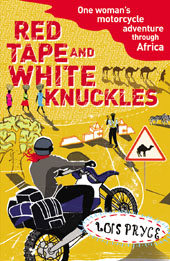
To most thirty-something women, walking across the street to get a skinny latte and the latest copy of heat in excruciating high heels is an all-terrain task in itself. But Lois Pryce isn't just any woman - nine to five and post-work white wine spritzers have never been her thing. Unafraid of a challenge - having already ridden her motorbike from Alaska to the southernmost tip of South America - she decided she could never be one to settle for a last minute package holiday in Viva Espana. So, she began the kind of adventure most of us could only ever dream of. Donning her sparkly crash helmet and armed with her trusty maps and a baffling array of visas, Lois got on her bike once more to make an impressive international journey. Alone. No support vehicles, no fancy GPS and no satellite phone.Leaving from London, finishing in Cape Town - and the small matter of tackling the Sahara, war-torn Angola and the Congo Basin along the way - this feisty independent woman's grand trek through the Dark Continent of Africa is the definitive motorcycling adventure.
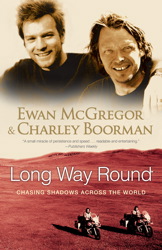
It started as a daydream. Poring over a map of the world at home one quiet Saturday afternoon, Ewan McGregor - actor and self-confessed bike nut - noticed that it was possible to ride all the way round the world, with just one short hop across the Bering Strait from Russia to Alaska. It was a revelation he couldn't get out of his head. So he picked up the phone and called Charley Boorman, his best friend, fellow actor and bike enthusiast. 'Charley,' he said. 'I think you ought to come over for dinner...'
From London to New York, Ewan and Charley chased their shadows through Europe, the Ukraine, Kazakhstan, Mongolia and Russia, across the Pacific to Alaska, then down through Canada and America. But as the miles slipped beneath the tyres of their big BMWs, their troubles started. Exhaustion, injury and accidents tested their strength. Treacherous roads, unpredictable weather and turbulent politics challenged their stamina. They were chased by paparazzi in Kazakhstan, courted by men with very large guns in the Ukraine, hassled by the police, and given bulls' testicles for supper by Mongolian nomads.
And yet despite all these obstacles they managed to ride over 20,000 miles in four months, changing their lives forever in the process. As they travelled they documented their trip, taking photographs, and writing diaries by the campfire. Long Way Round is the result of their adventures - a fascinating, frank and highly entertaining travel book about two friends riding round the world together and, against all the odds, realising their dream.
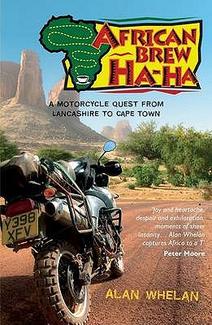
Tea-drinking is a ritual that binds people together. Alan Whelan was on a unique quest: to find the people at the hidden heart of Africa and sit down for a nice cup of tea with them. On the 14,000-mile solo journey through Morocco, Mauritania, Mali and all the way to Cape Town across deserts and the toughest roads imaginable, he met sporting legends and ministers, peacekeepers and outlaws, and countless people who shared their last morsel of food with him. Armed with little more than blind optimism, he experienced a jaw-dropping ride. Uplifting, insightful and funny, this is the story of one man's determination through the most physically and emotionally challenging five months of his life. This title features coverage, reviews and press releases.